.png)
Heal is a mental health platform to broaden access to longterm support. As a founding product designer, I designed the responsive website and mobile app experience for both clinicians and care seekers. The app MVP is available for download on Android & iOS.
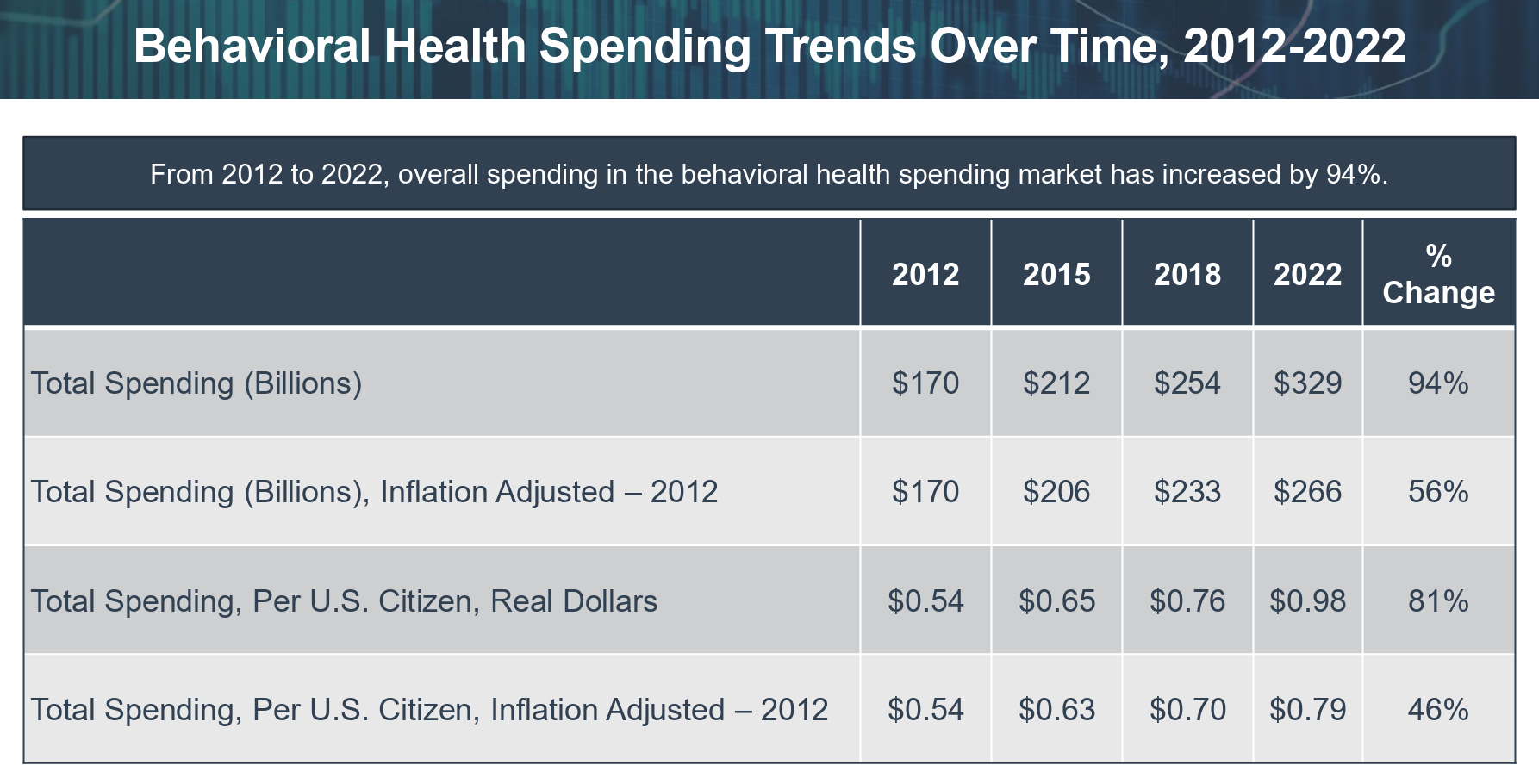
According to the National Institute of Mental Health, nearly 1 in 4 Americans experience mental illness, yet only 50% receive treatment—highlighting rising demand alongside persistent gaps in access. For some, therapy isn't an option, due to high costs or cultural stigmas. Others are open to therapy, but aren't sure when they need deeper care or struggle to find the right therapist for their needs.
A common first step for addressing mental health concerns is downloading a mental health app. However, most mental health apps today provide resources for mindfulness, such as meditations and calming audios, but don't offer a path towards long-term relief.
Heal’s goal is to bridge the gap between mental health needs and meaningful support by connecting users to the right level of care at the right time.
There are two primary user groups: care-seekers and clinicians. Care-seekers include anyone seeking mental health support, whether it's through therapy, educational content, or mindfulness.
Clinicians include therapists, psychologists, and social workers who are seeking high-quality referrals to new clients, based on their areas of expertise.
I designed the end-to-end experiences for both groups, thinking systemically to match care-seekers with the right clinicians for their needs, and vice versa.
When I joined the team, the startup's founders had already gathered substantial market research on the problem. Before designing, I had several meetings with the founders to understand the opportunity space & problem we wanted to solve.

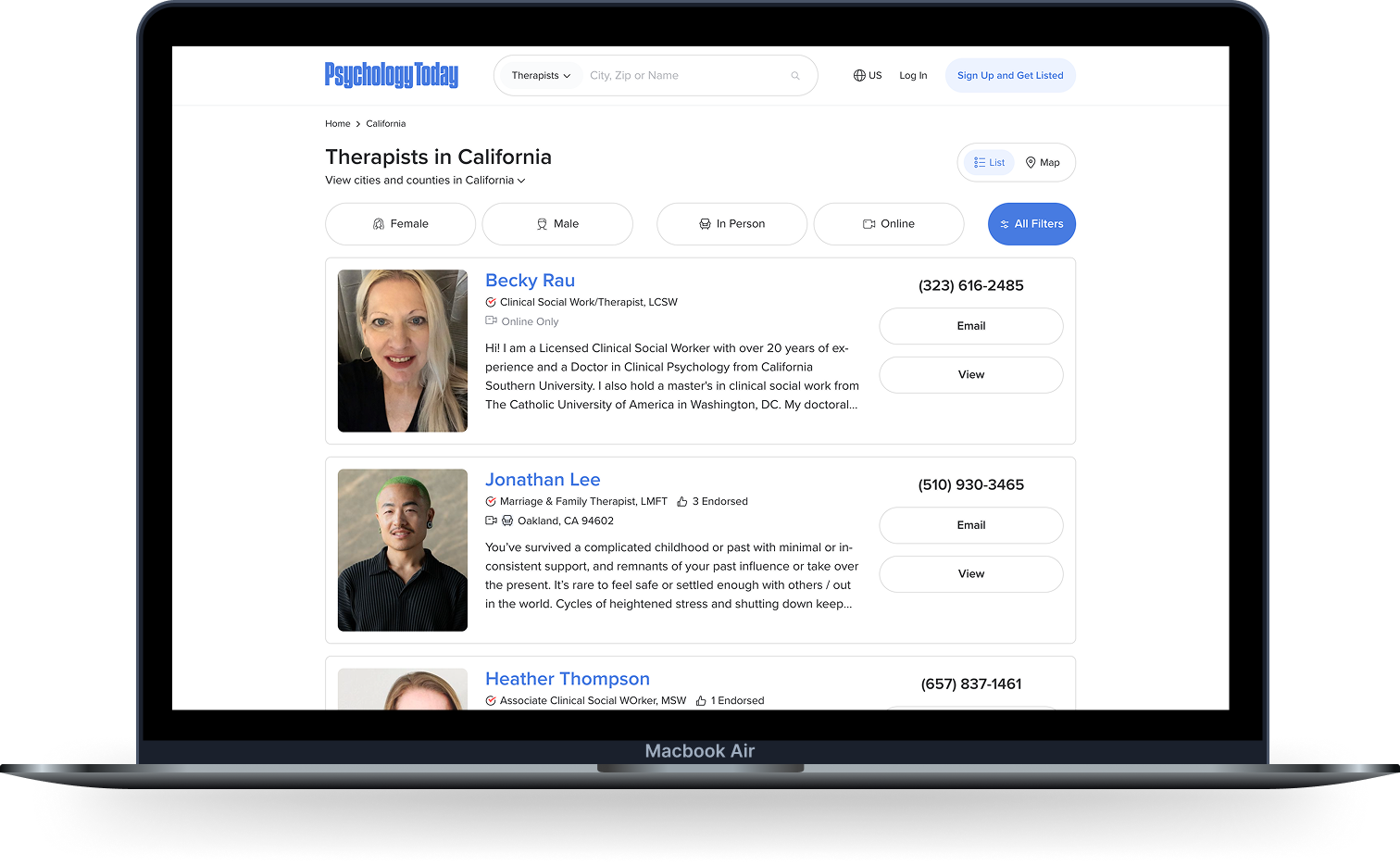
I examined both clinician directories, such as Psychology Today and Mental Health Match, and mental health platforms, like Calm, Headspace, and Modern Health. My focus was assessing experiences connecting patients and clinicians.


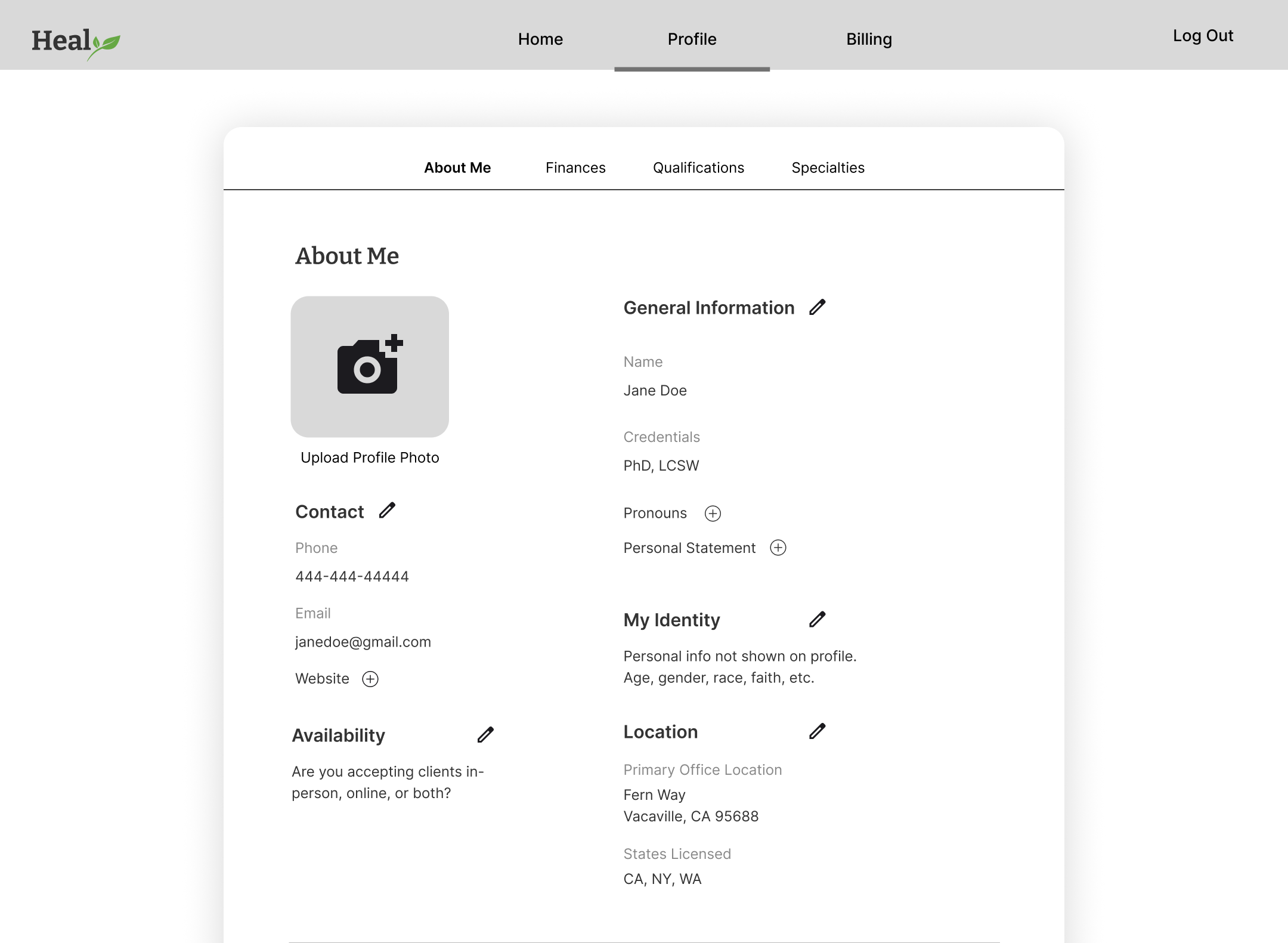
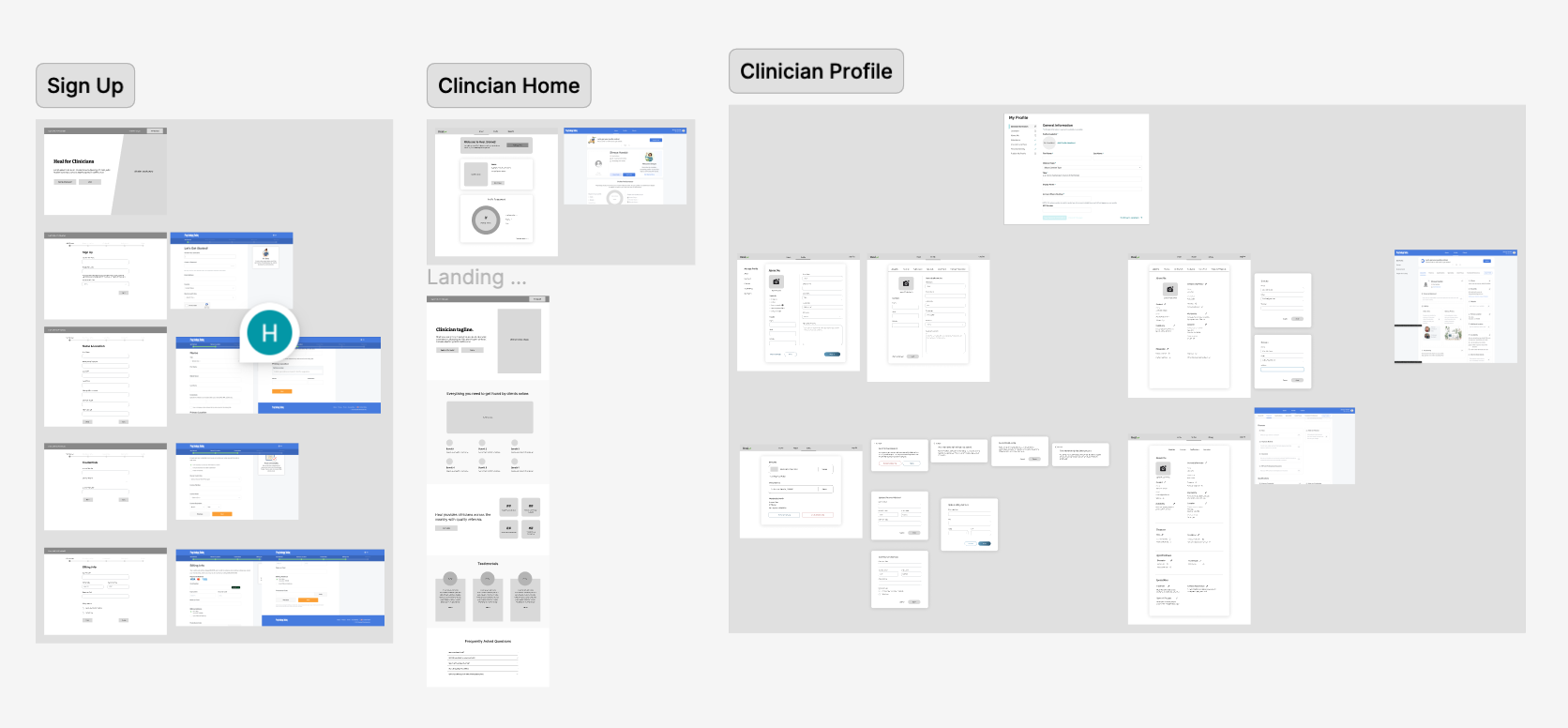
I started the design process by creating lo-fi wireframes in Figma based on client requirements & the competitor research. I began with the desktop clinician experience.


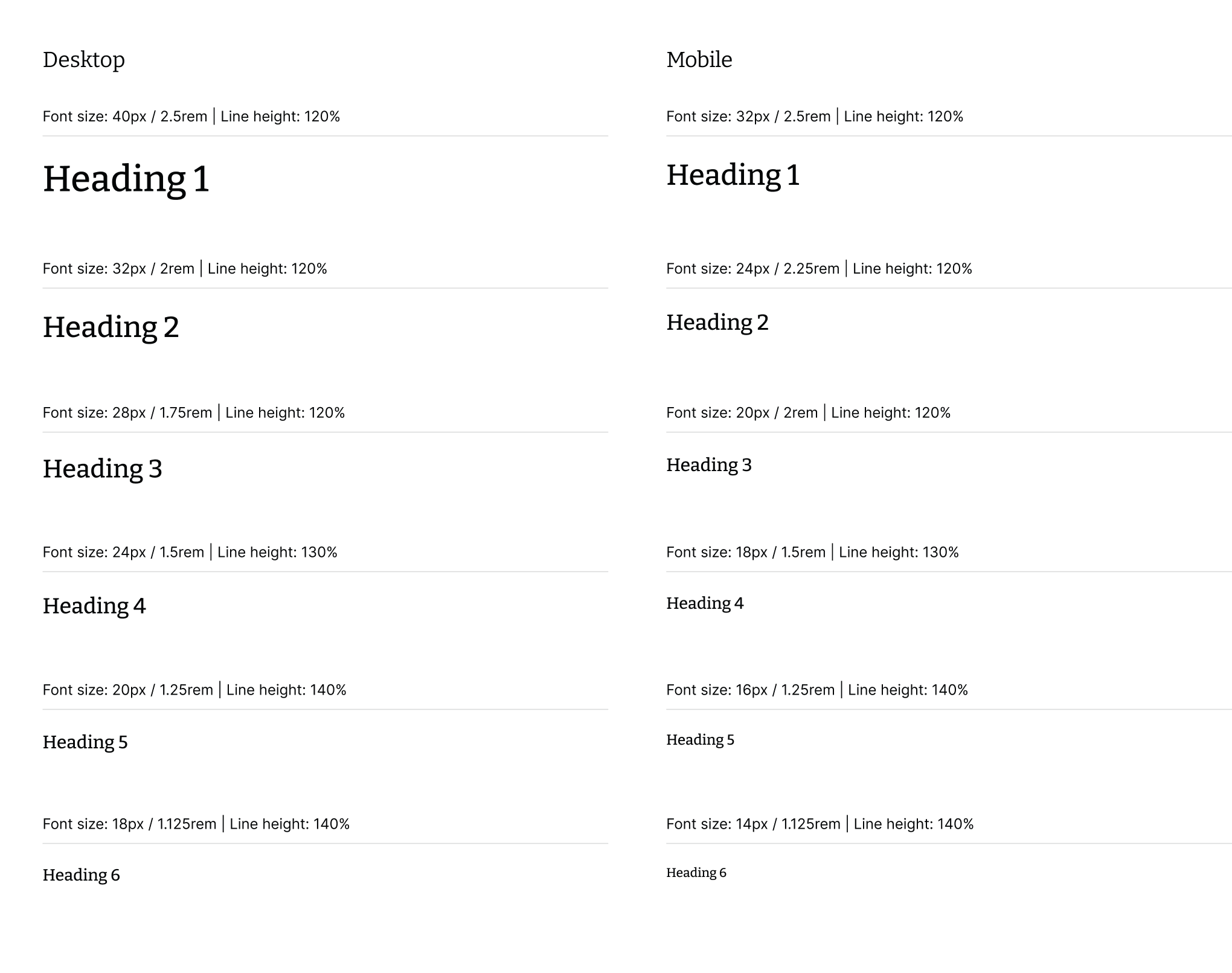
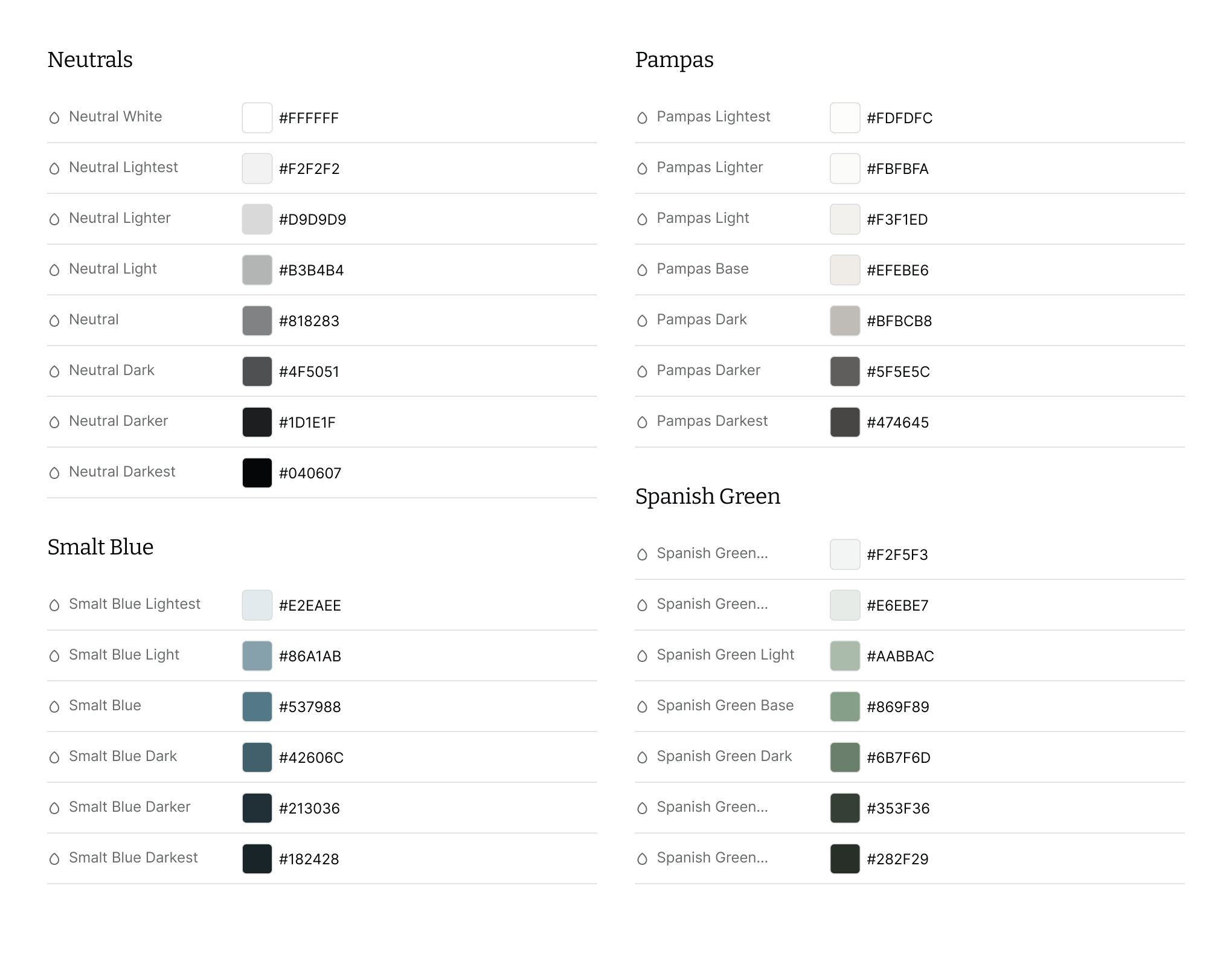
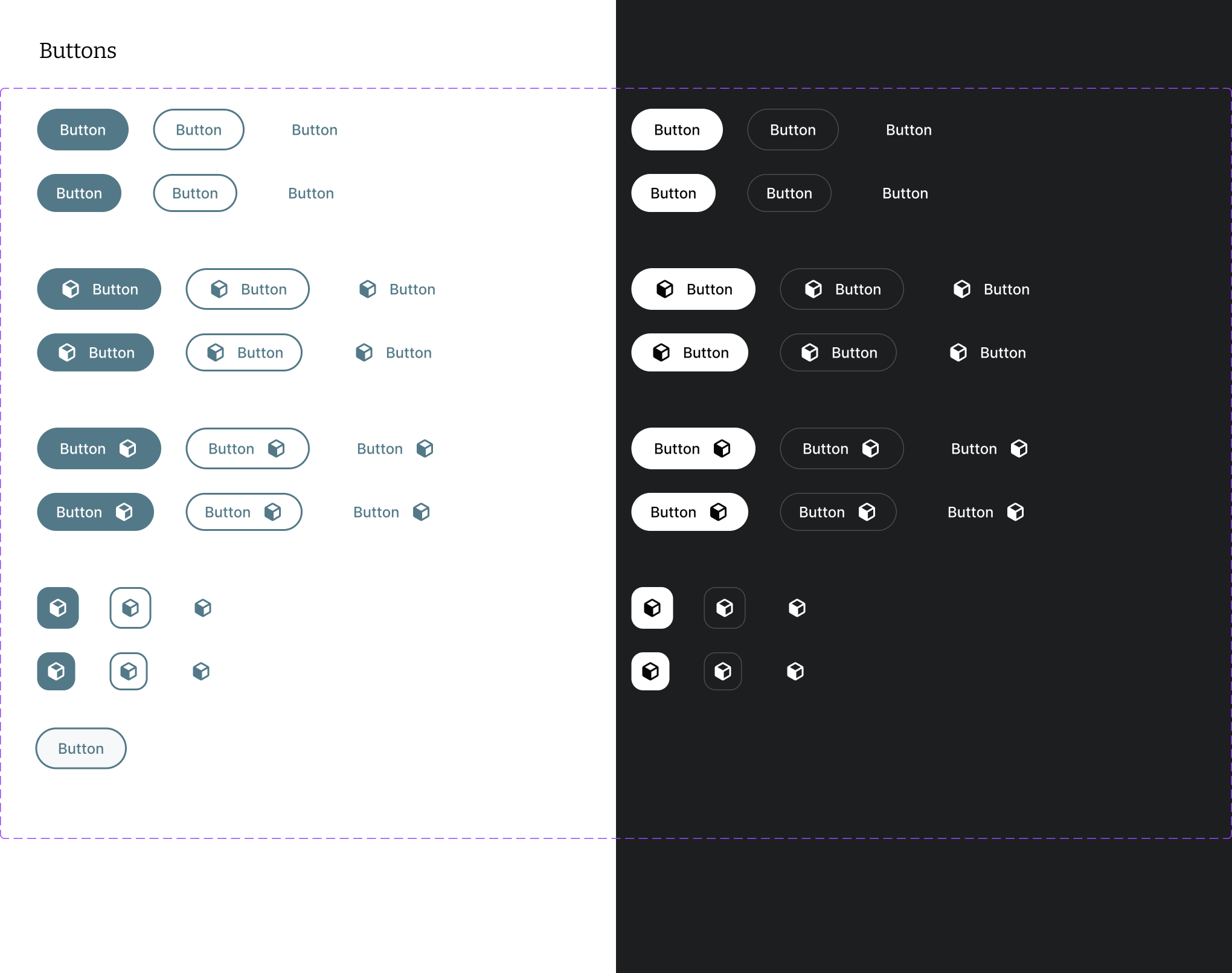
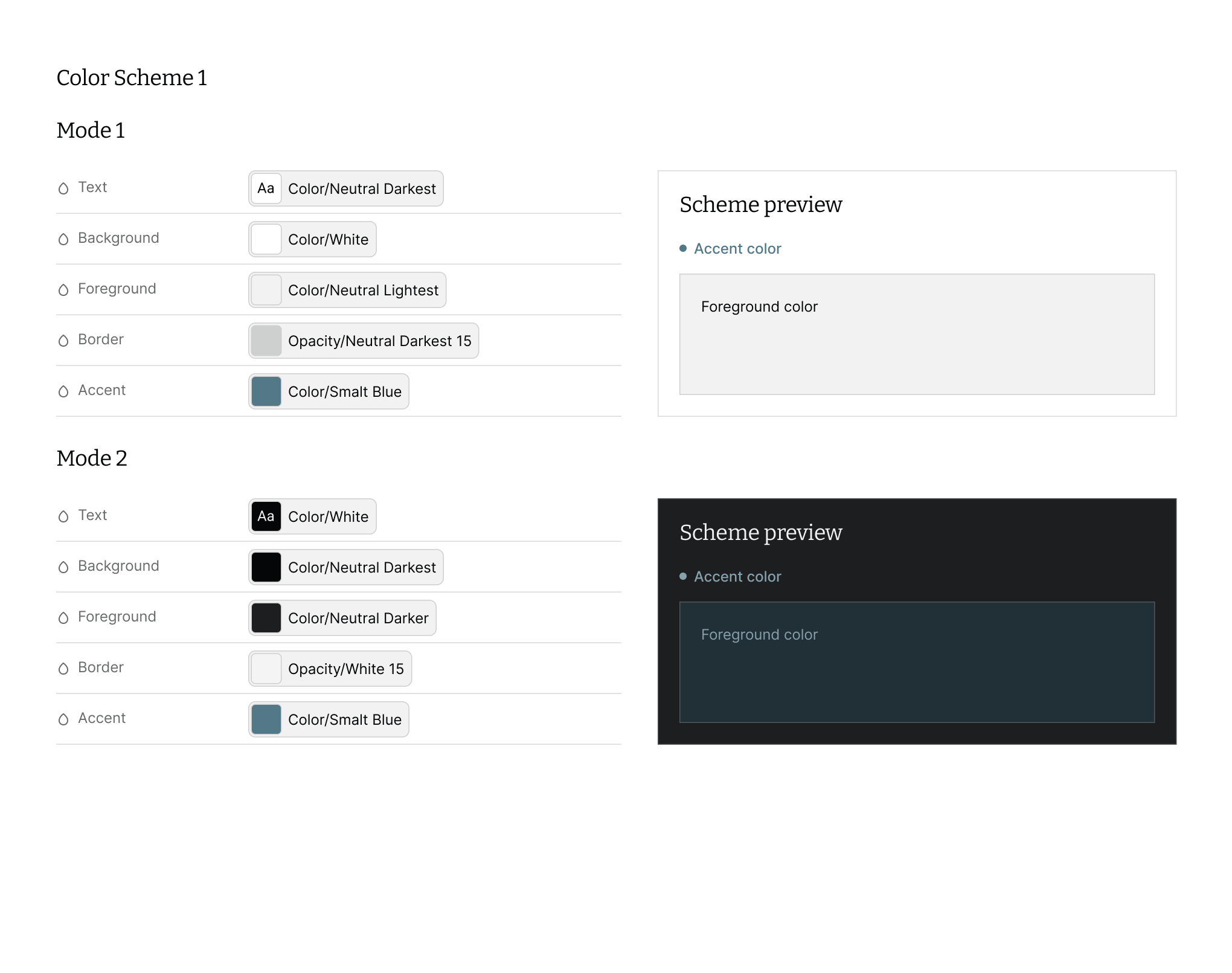
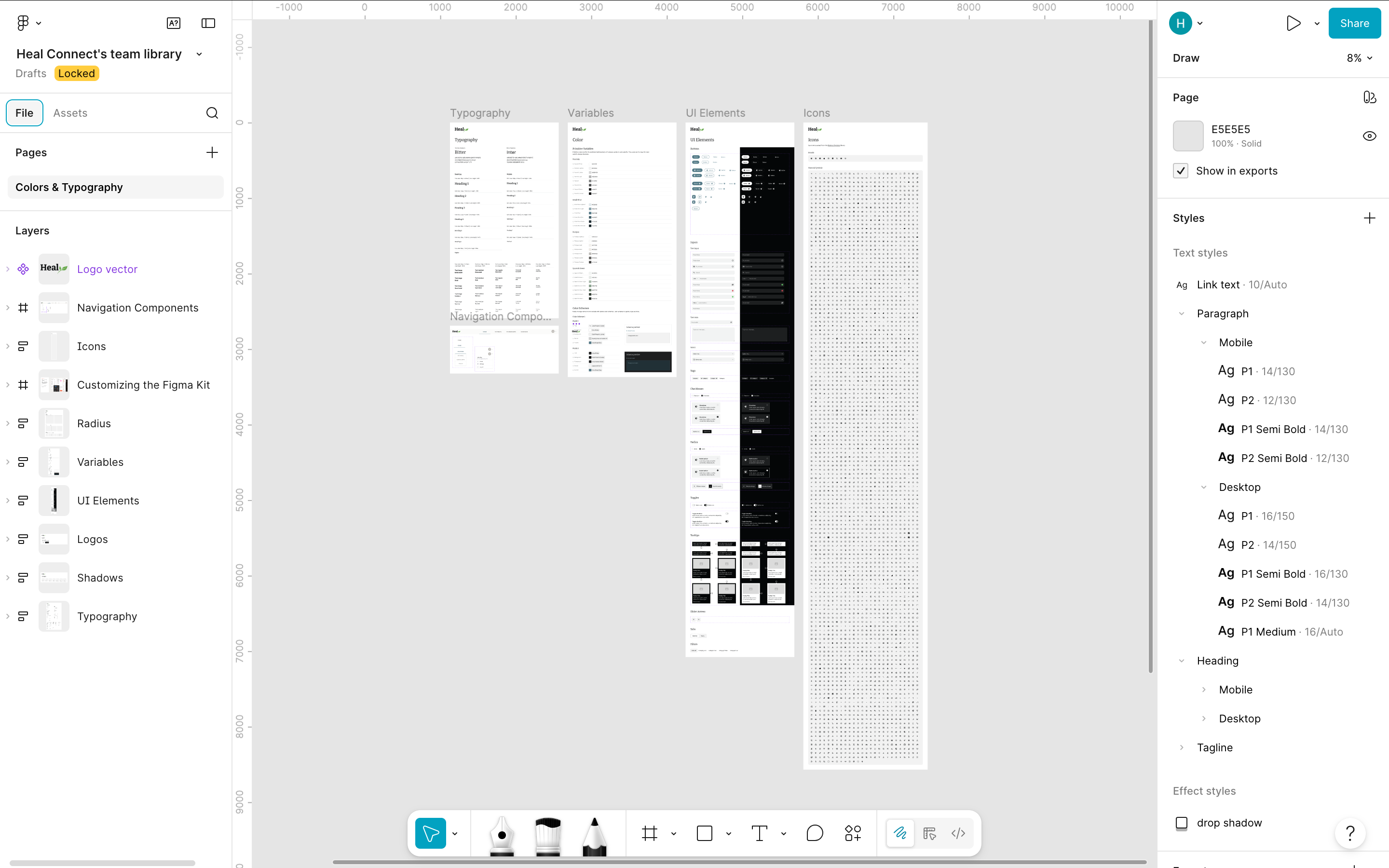
I collaborated with the other designer on our team to build a cohesive design system. We used the AI tool Relume to generate a design system for mobile & desktop based on the typography & colors we chose. Our goal was to create a clean, calming interface. For type, we paired a serif heading with a readable, sans-serif body, and for colors, we primarily used cool-toned blues & tans.


Next, I mocked up & prototyped hi-fi screens, applying the design system to build off my own wireframes and those created by the other designer on the team. Below are some of the key screens from the mobile app.


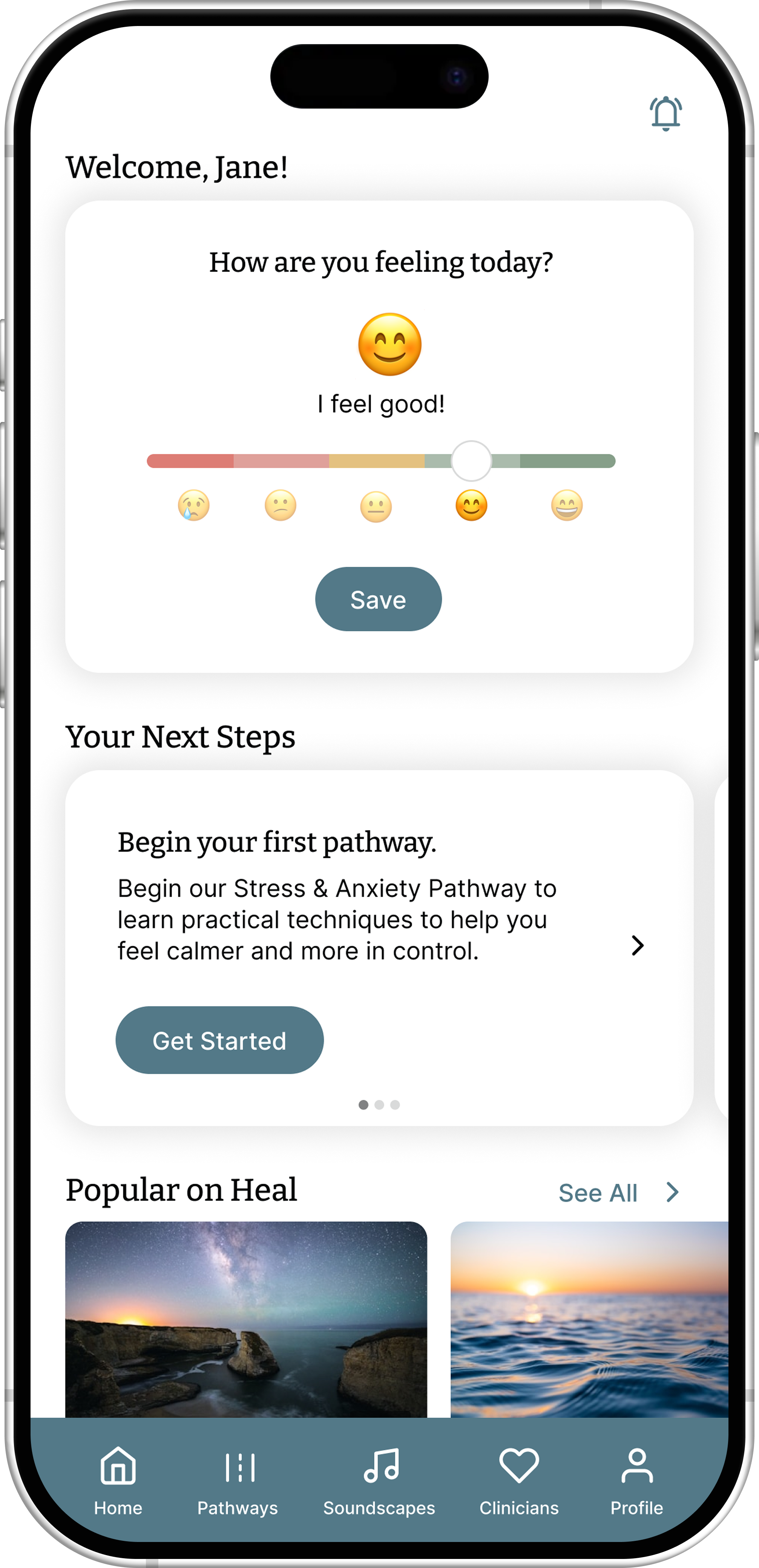
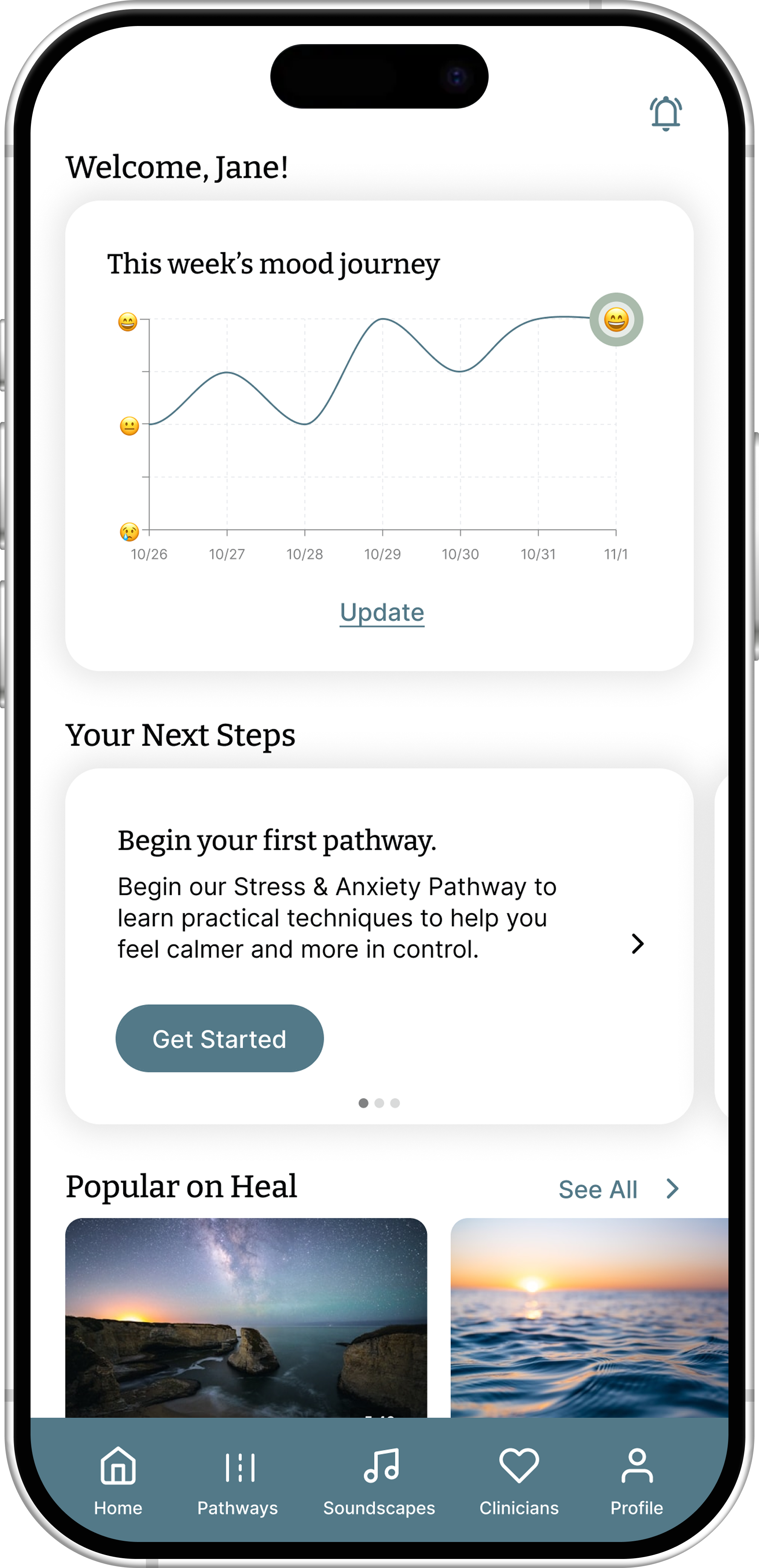
The home page is the mobile app's entry point. It prompts users to complete a mood check-in and guides the user through the app.
User considerations:
- What hierarchy should the content follow?
- How can we make the mood check-in feel less clinical?
- How do we personalize the home page to the user?


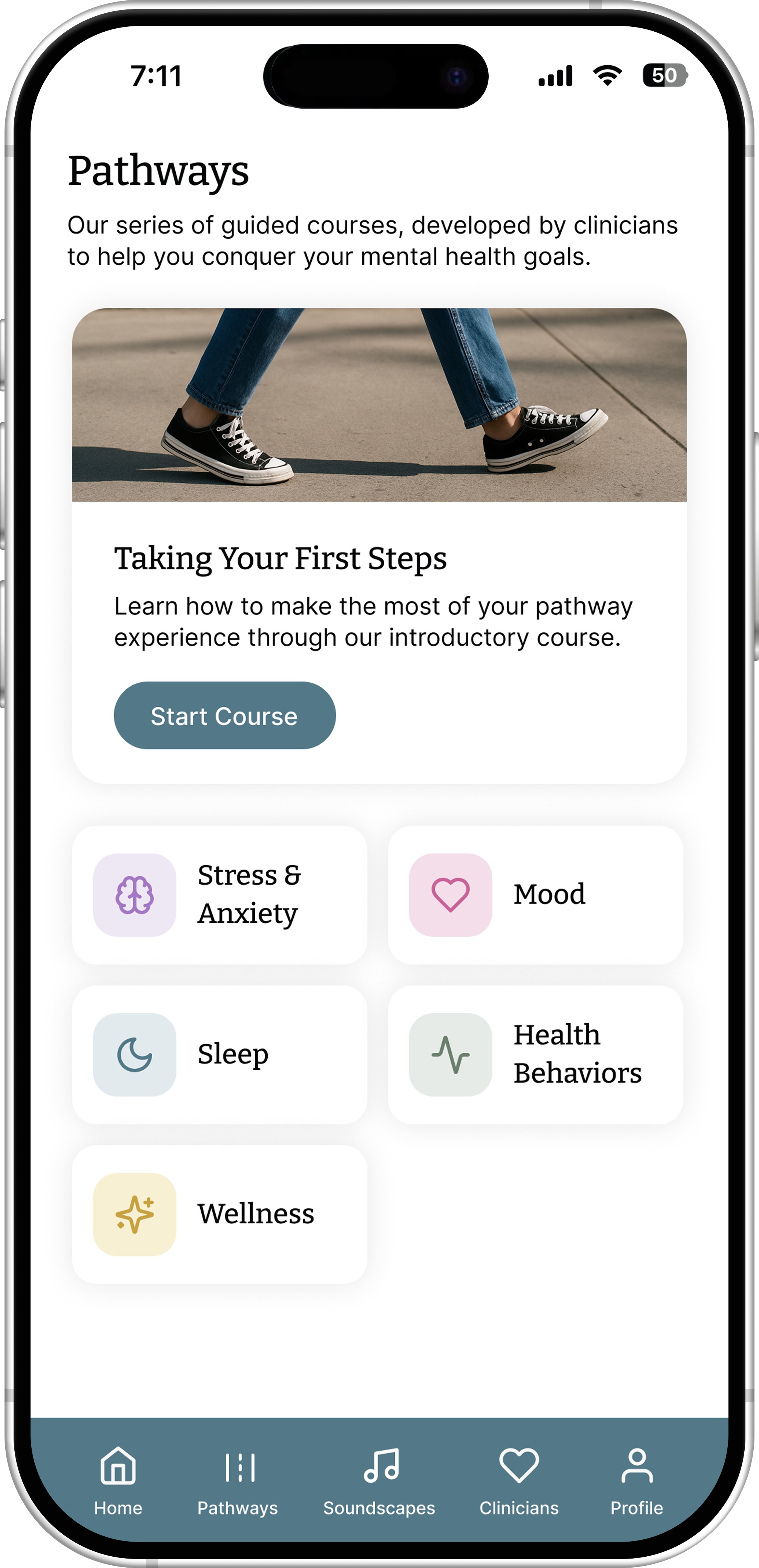
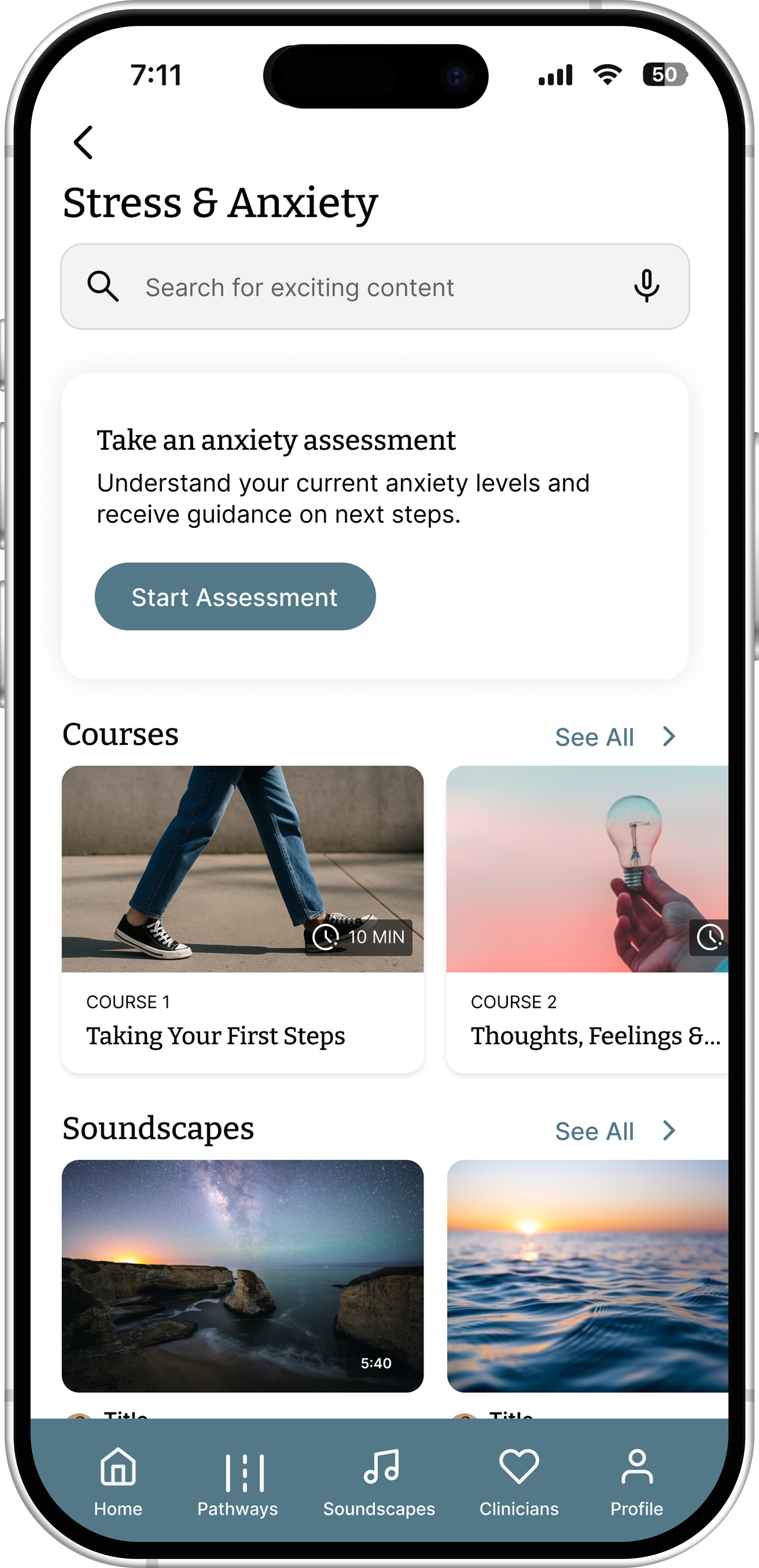
Pathways are series of guided, clinician-created courses to provide users with deeper mental health support in six key areas. They serve as a free resource to bridge the gap between content and clinical care.
User considerations:
- How can we guide the user through the pathway without making them feel restricted?
- How can we monitor user's progress to guide them to clinical care if needed?


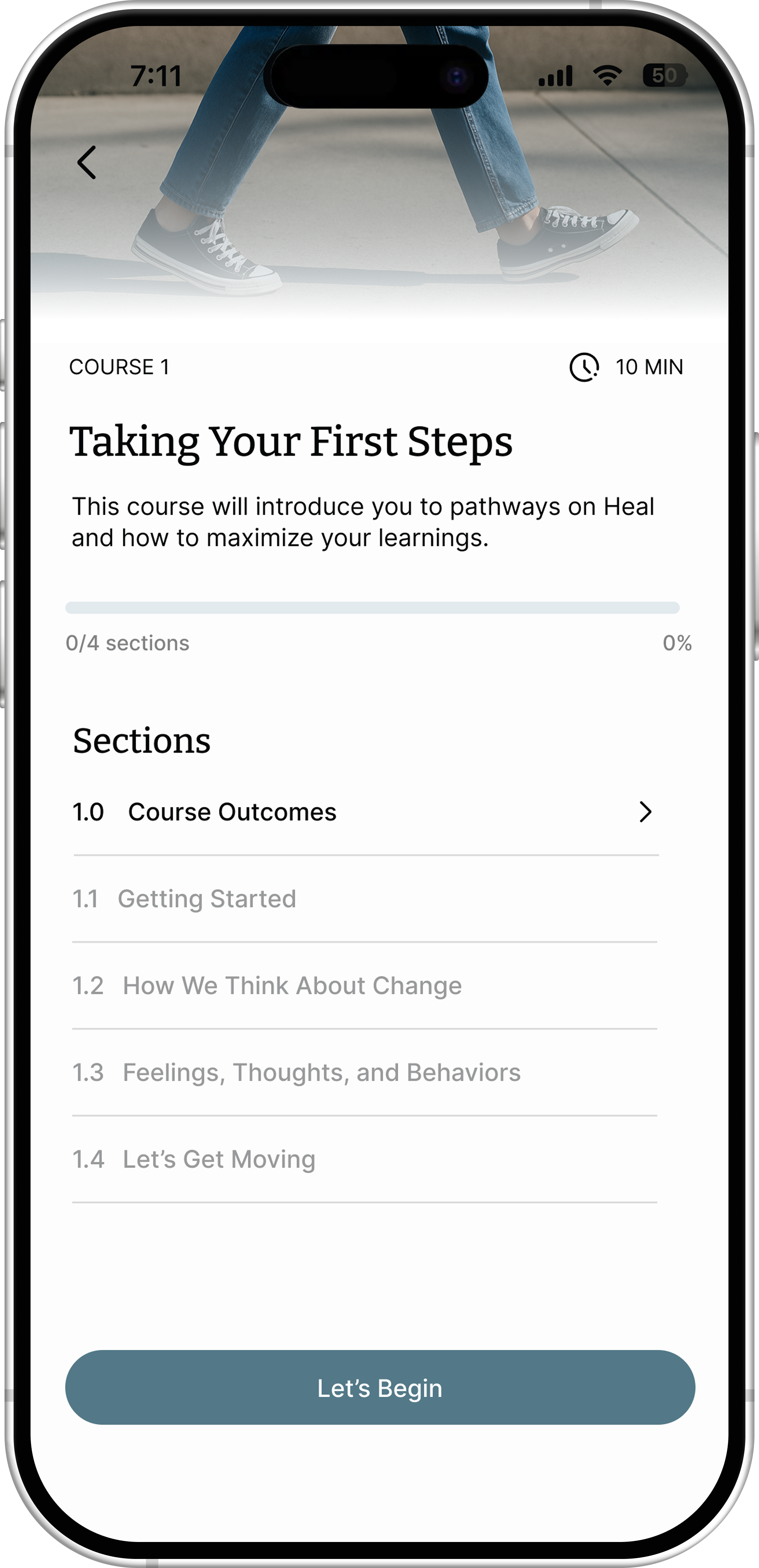
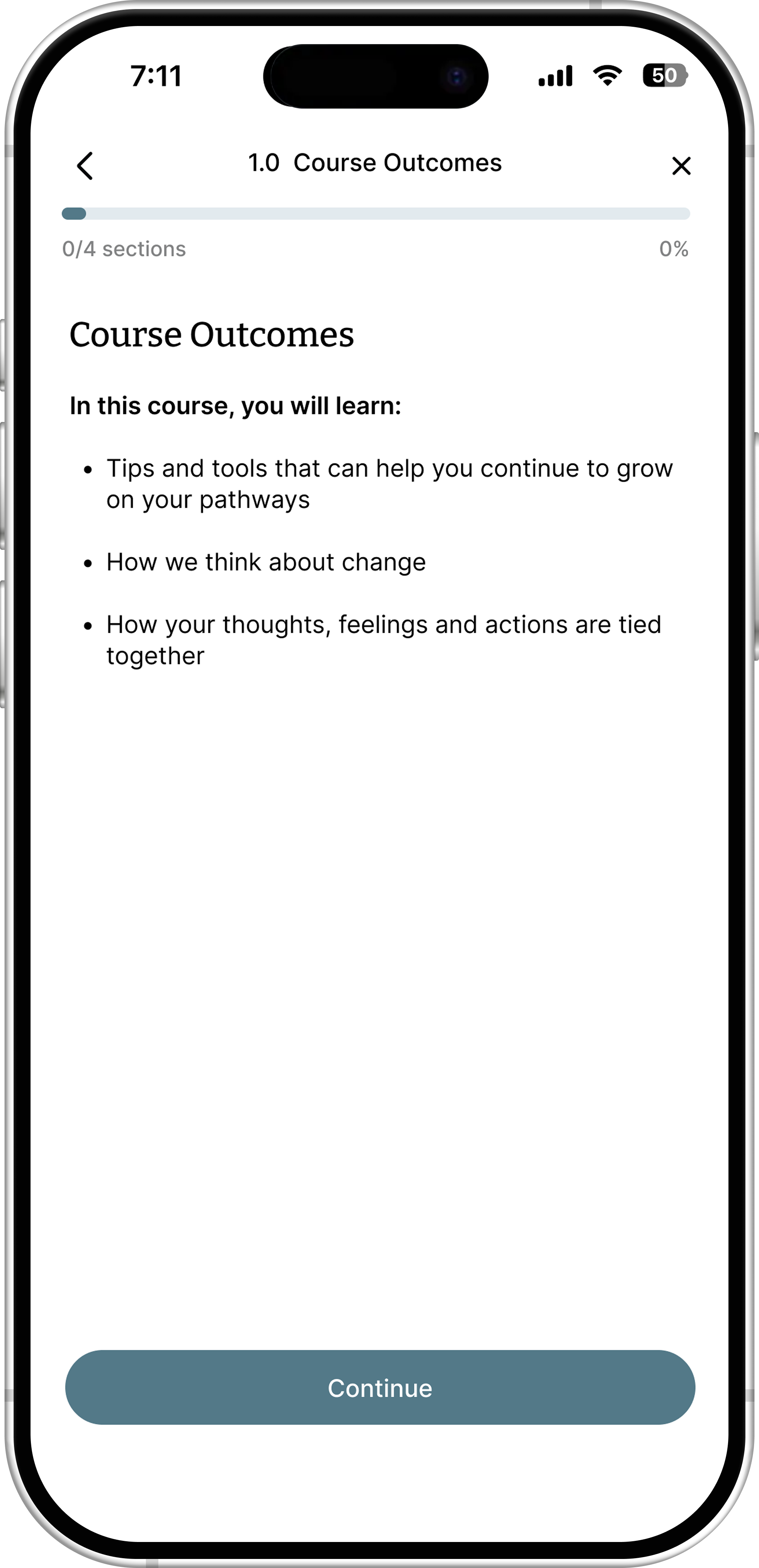
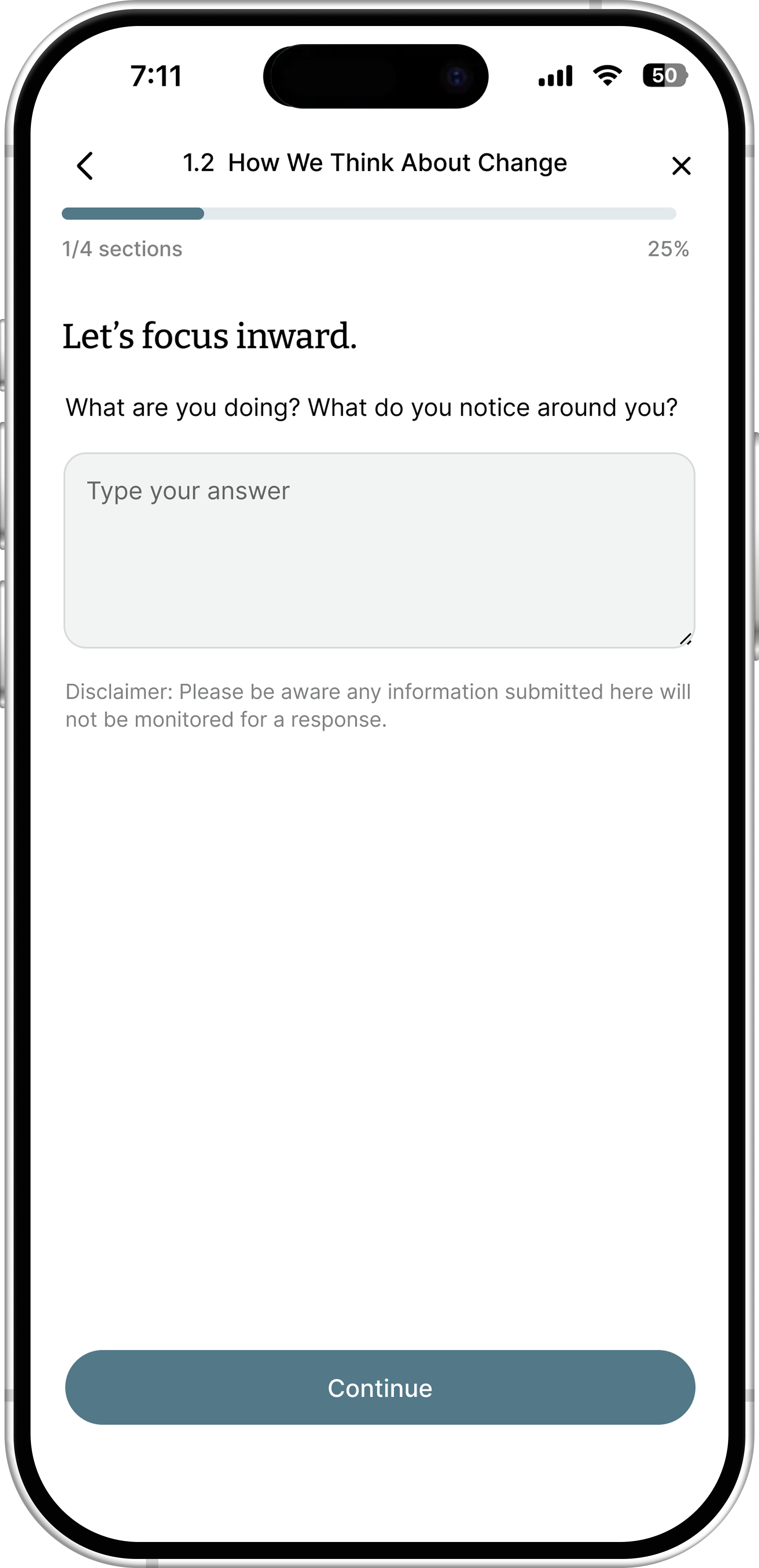
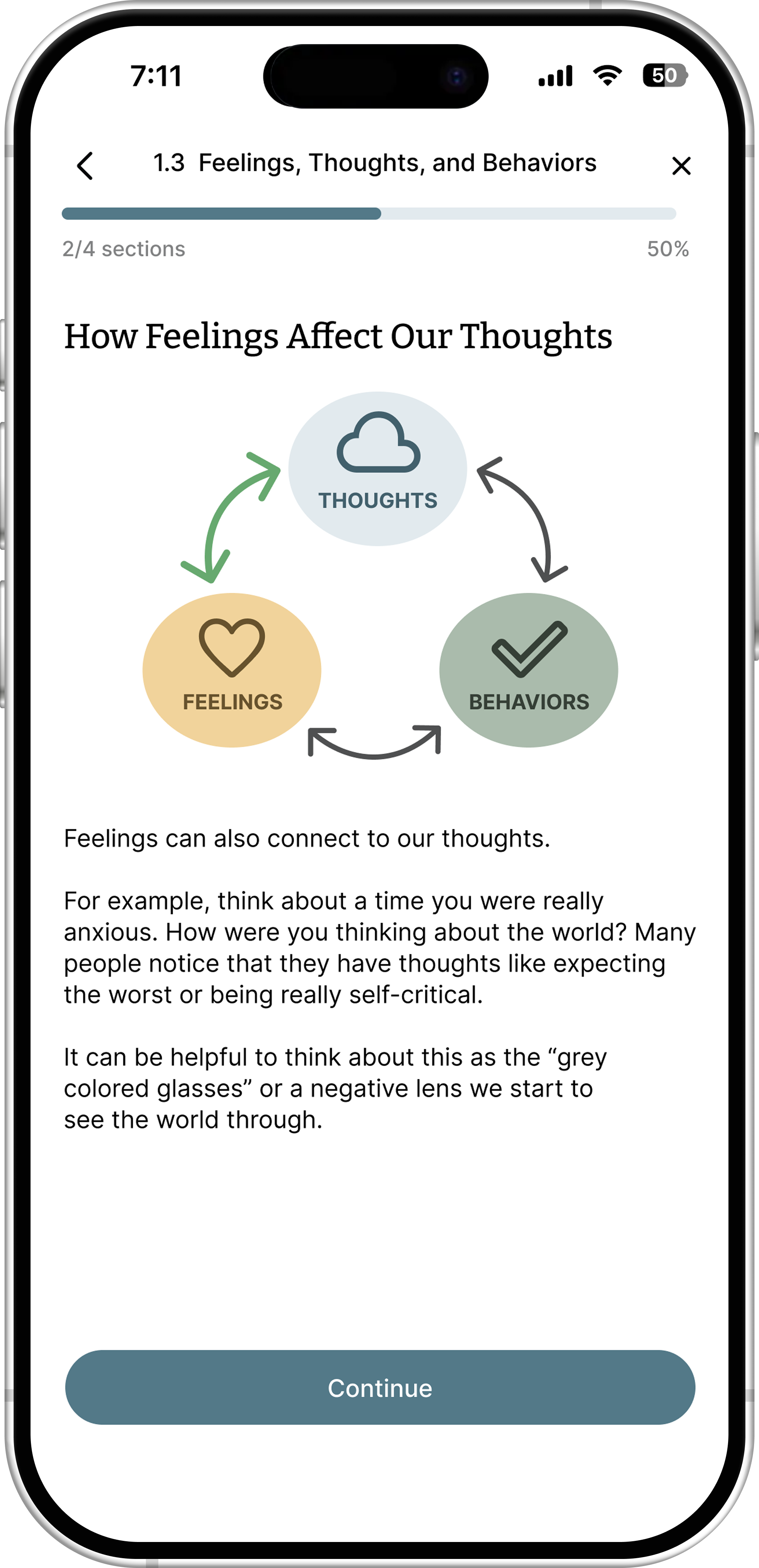
Each course includes a landing page, course outcomes, and course content, including interactive activities & text-based lessons. Due to the number of courses, I created templates to streamline design & development, working with the team's clinician to determine how to structure the content.
User considerations:
- How can we show users what to expect without overwhelming them?
- How can we present long-form content in a digestible, engaging way?
- How can users track their progress in the course?


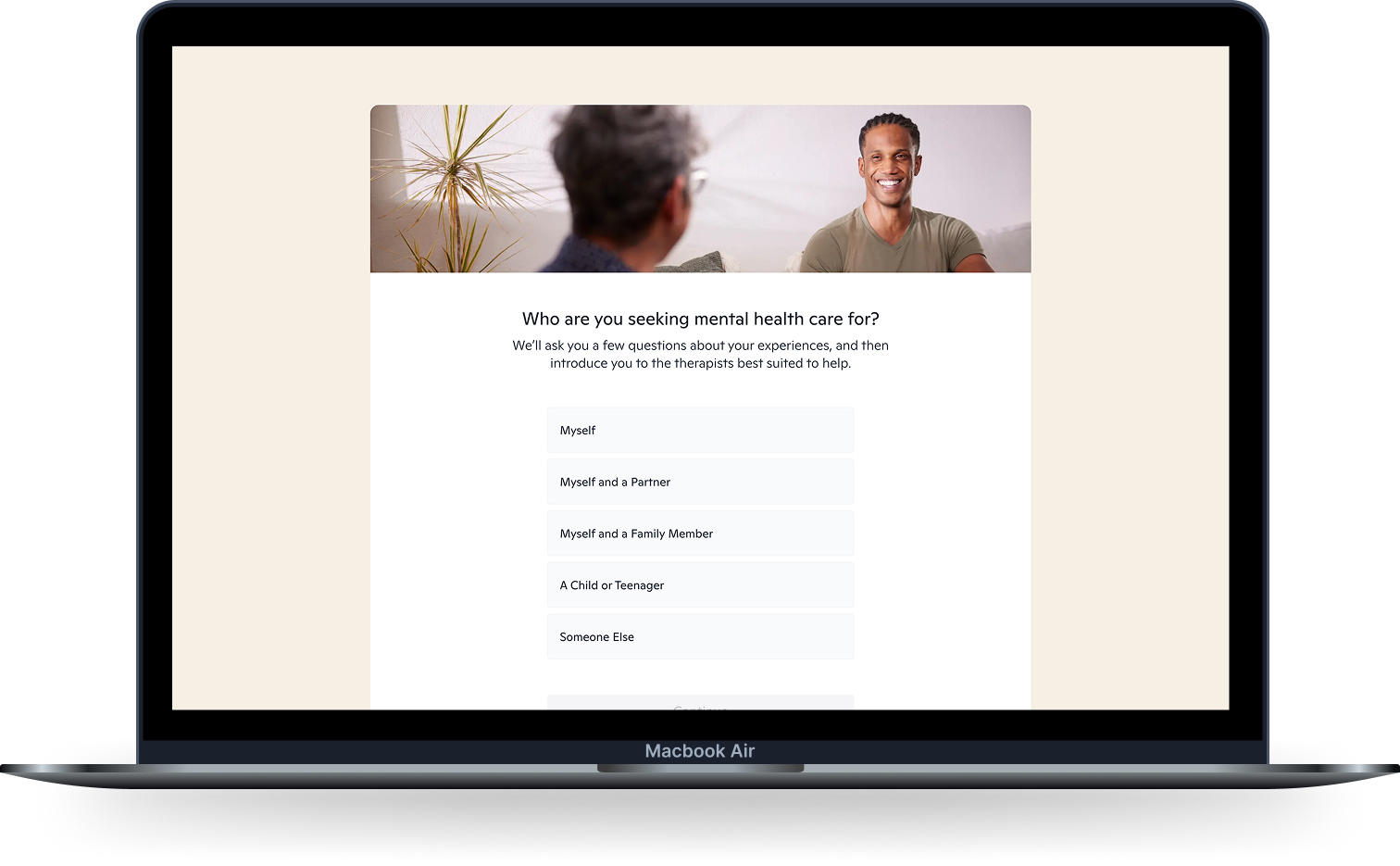
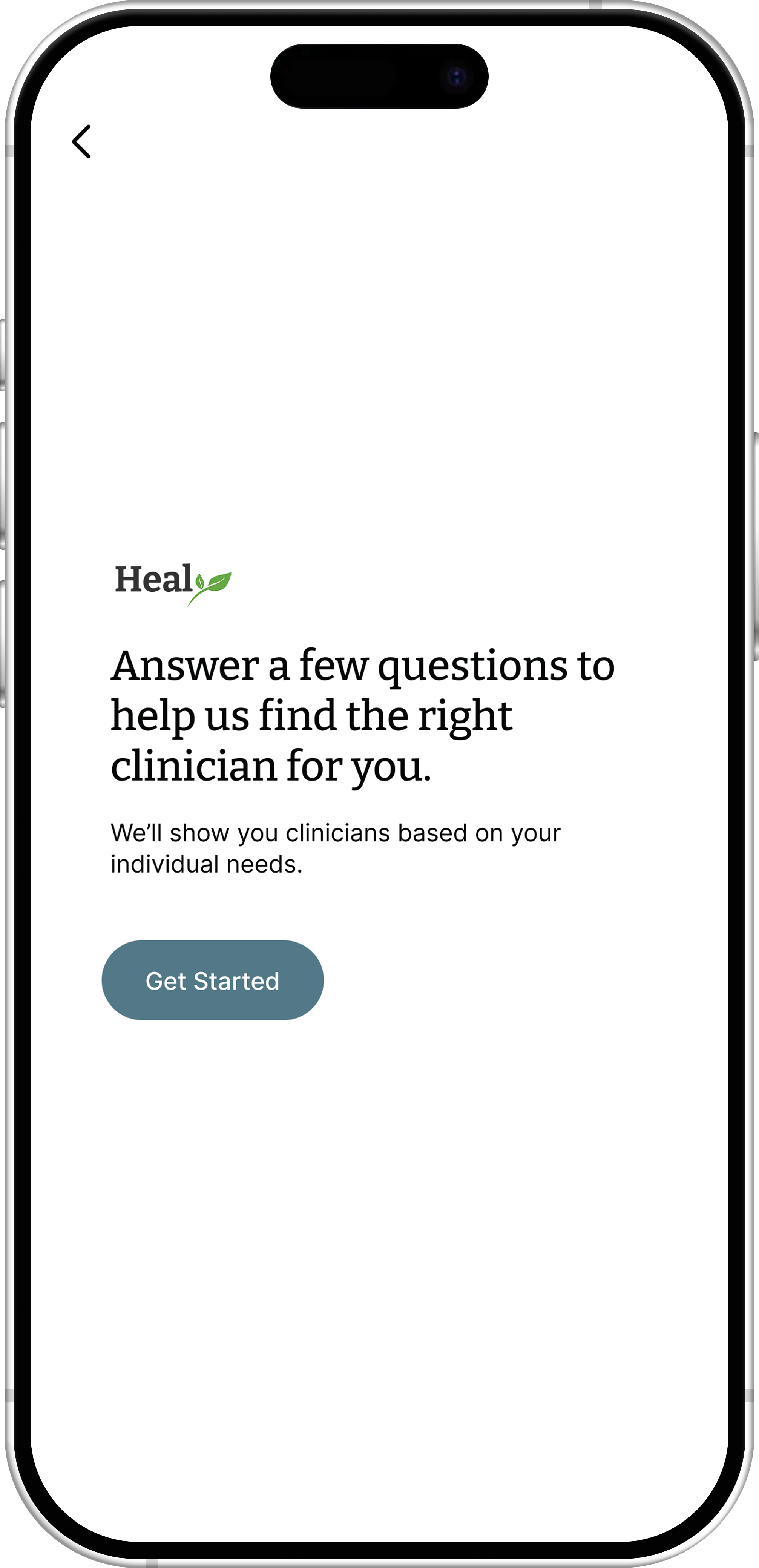
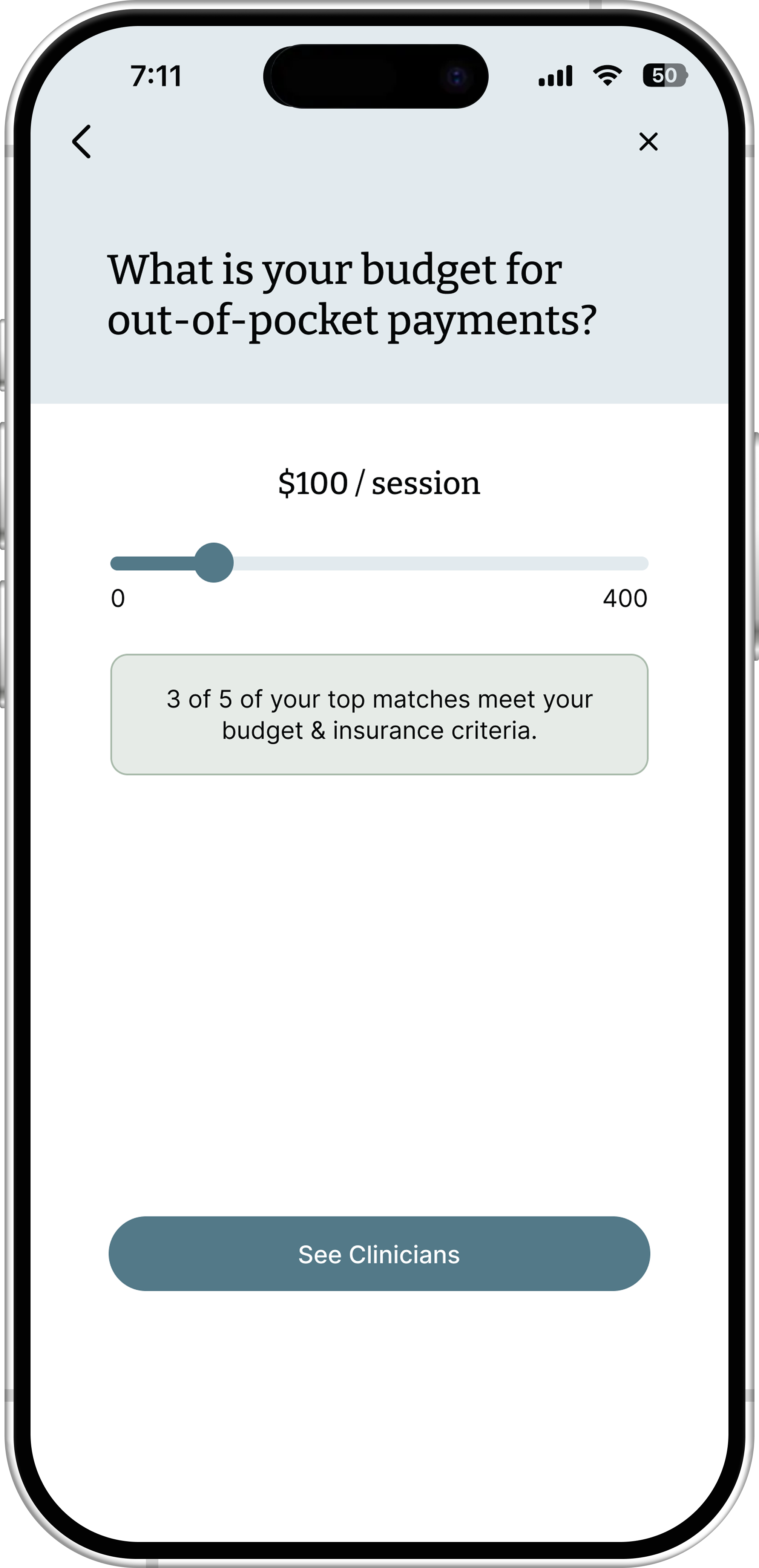
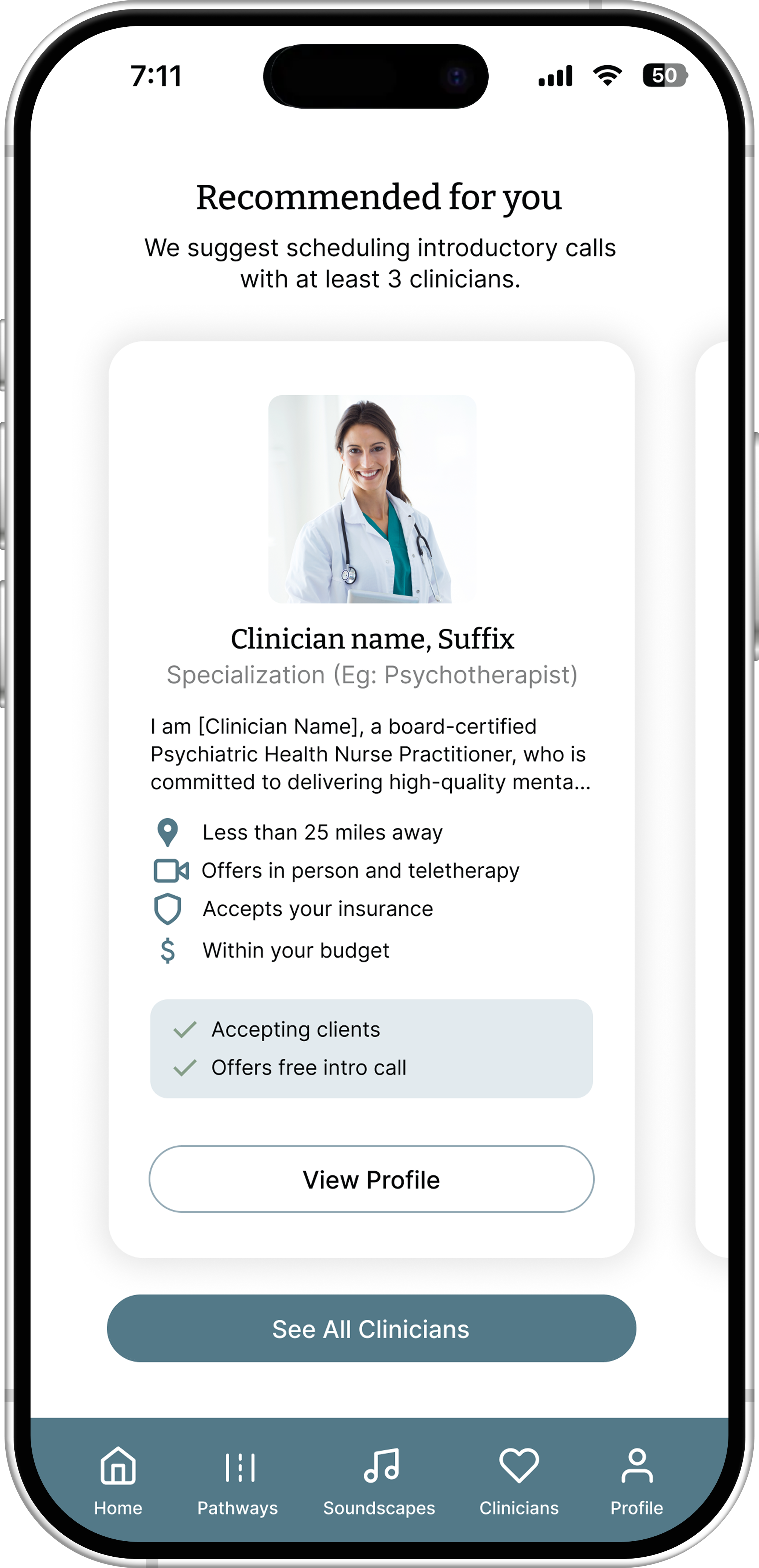
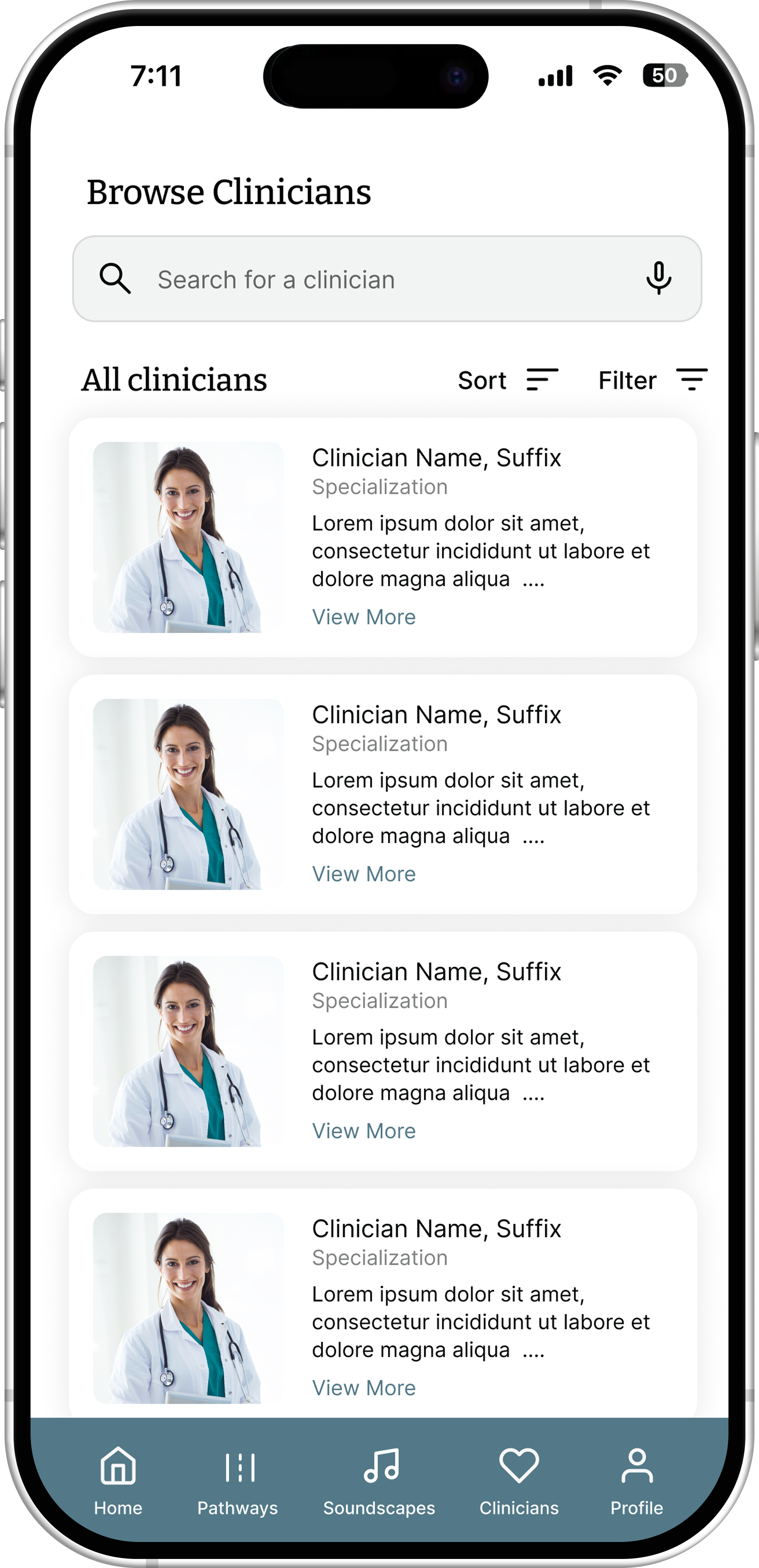
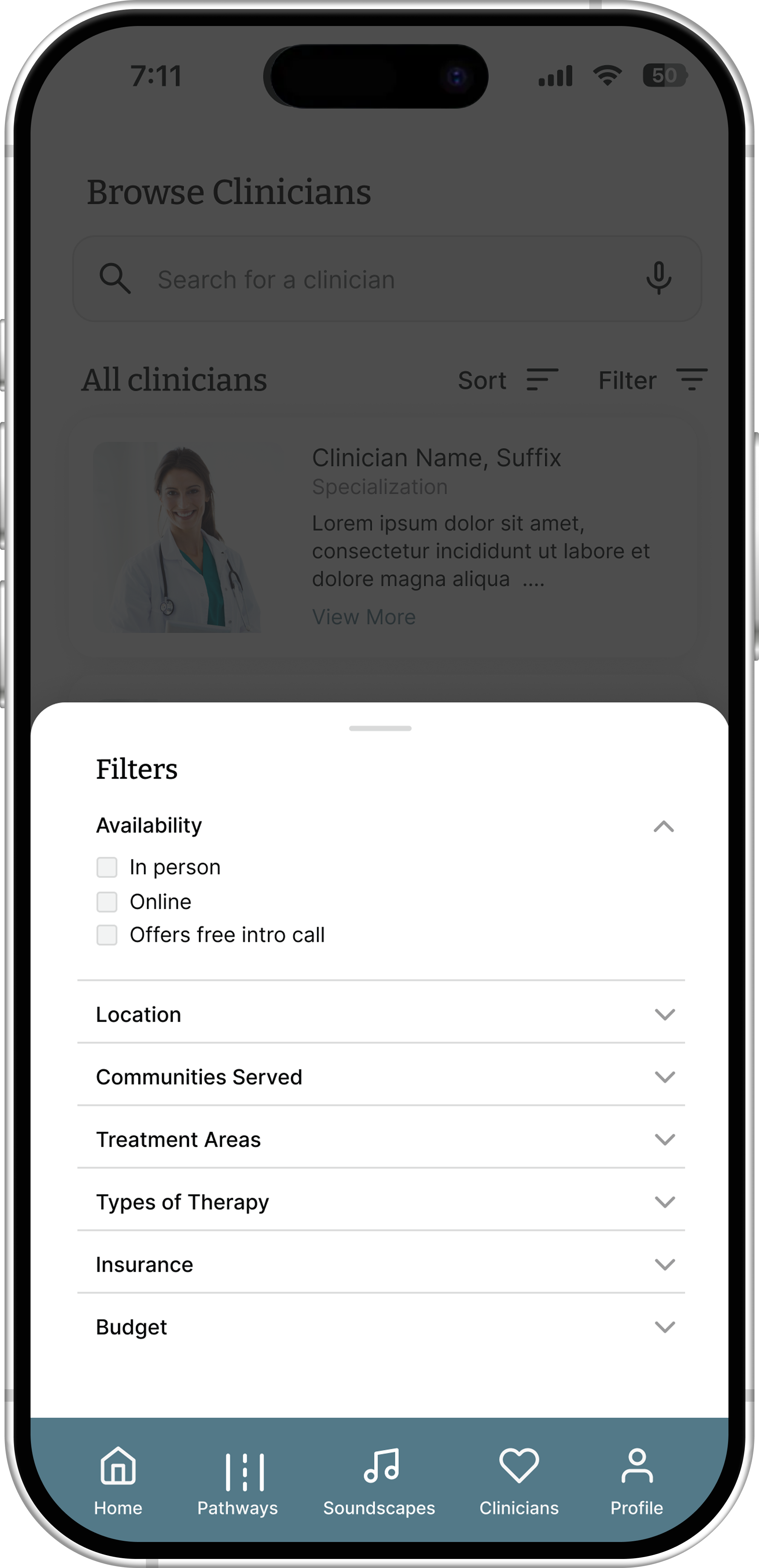
To match users with clinicians best suited to their needs, I created a short questionnaire for users to share what they were looking for, covering key decision-making factors, such as mental health specialties, budget and location. The questions align directly with the information gathered in the clinician profile, so we can recommend clinicians based on the user's criteria. Users can also browse the full directory with relevant filters.
User considerations:
- How do we prevent decision fatigue when finding a clinician?
- What are the most important factors users consider when searching for a clinicians?

The mobile app is available for download on Android and iOS, and the desktop experience is live at pathtoheal.org. The clinician experience and directory are under development.
Now that the MVP has launched, my goal is to work with our developers to enhance design fidelity between the mock-ups and implementation, improve responsiveness of the web experience, and gather feedback from users to inform the next iteration.
Being able to download an app and sign up for a product I designed has been one of the most rewarding experiences in my UX design journey. Some of the countless skills I have learned through the experience of designing Heal's MVP include effective cross-functional collaboration, creating scalable design systems, and systems thinking to build experiences across multiple modes.
Creating a cohesive experience across our mobile app, web experience, and desktop clinician platform was challenging — and still a work in progress — but it has taught me how to both design for products within larger ecosystems, and how to design that ecosystem from scratch.